
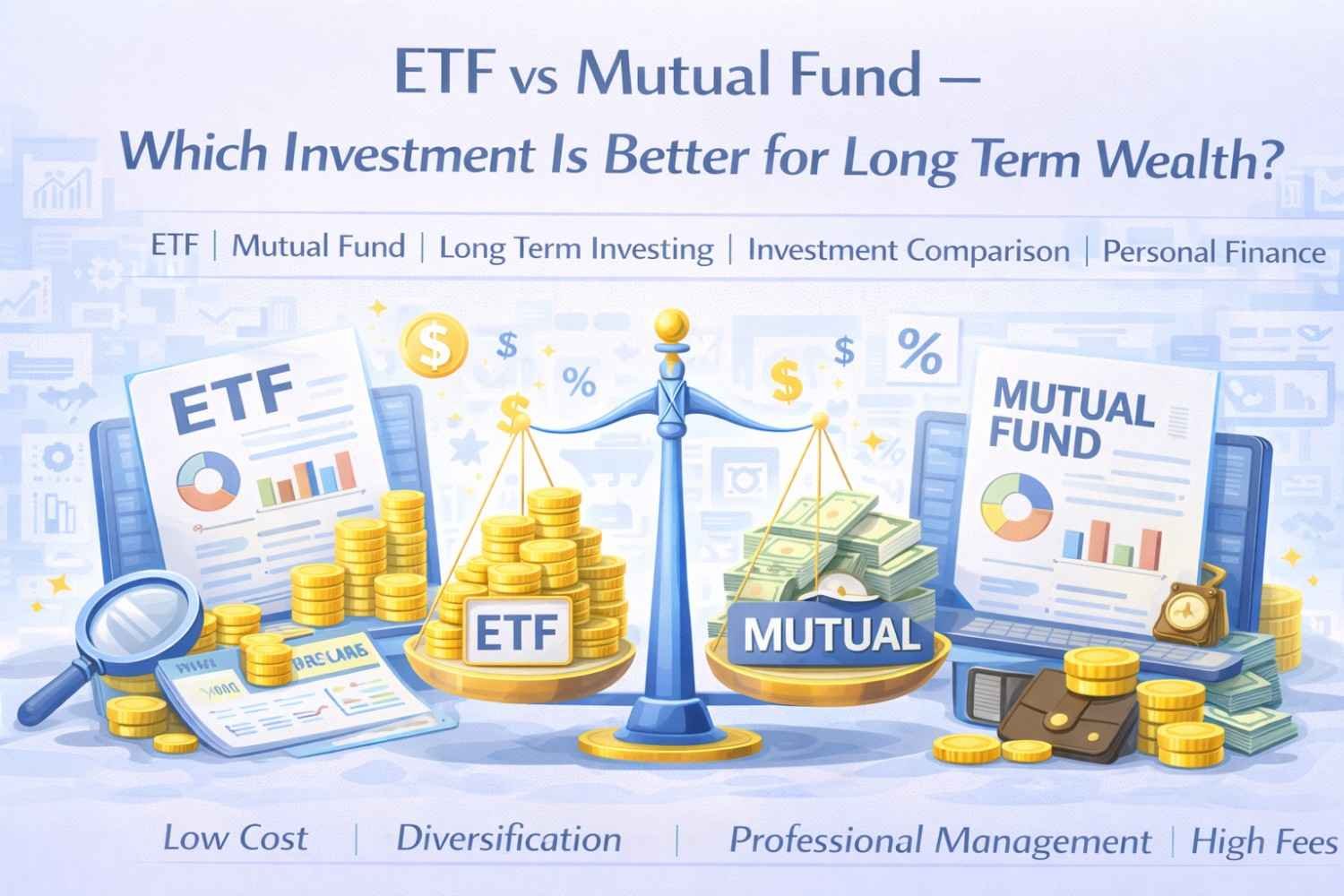
Investing has become one of the most effective ways to build wealth and achieve financial independence. However, for many investors especially beginners the biggest challenge is choosing the right investment vehicle. Two of the most popular options in the financial world are Exchange Traded Funds (ETFs) and Mutual Funds.
Both investment options allow investors to diversify their portfolios, reduce risk, and participate in the growth of financial markets. But when comparing ETF vs Mutual Fund, many investors wonder which one is the better choice for building long-term wealth.
Understanding the difference between ETFs and Mutual Funds is crucial for making smart financial decisions. Both investment vehicles pool money from multiple investors to purchase a diversified portfolio of assets such as stocks, bonds, or other securities.
In this guide, we will compare ETF vs Mutual Fund, explain their key features, and help you determine which investment strategy is better for long-term wealth creation.
What Is an ETF (Exchange Traded Fund)?
An Exchange Traded Fund (ETF) is a type of investment fund that trades on stock exchanges, similar to individual stocks.
ETFs typically track an index such as:
- S&P 500
- NASDAQ
- Dow Jones Industrial Average
When you invest in an ETF, you are essentially buying a basket of securities that represents a specific market index or sector.
Key Features of ETFs
- Traded on stock exchanges throughout the day
- Usually lower expense ratios
- Highly tax-efficient
- Easy diversification
Because of these advantages, ETF investing has become extremely popular among long-term investors.
What Is a Mutual Fund?
A Mutual Fund is an investment vehicle that pools money from multiple investors to buy a diversified portfolio of securities.
Unlike ETFs, mutual funds are often actively managed by professional fund managers who attempt to outperform the market.
Key Features of Mutual Funds
- Professionally managed portfolios
- Priced once per day after market close
- Wide range of investment strategies
- Suitable for long-term investors
Many retirement accounts and pension plans include Mutual Funds as core investment options.
Step-by-Step Comparison: ETF vs Mutual Fund
1. Trading Flexibility
ETFs
- Traded throughout the day like stocks
- Investors can buy and sell at market prices
- Allows real-time trading
Mutual Funds
- Bought and sold only once per day
- Price determined after the market closes
For investors who want flexibility, ETFs provide greater trading convenience.
2. Expense Ratios and Fees
Investment costs can significantly impact long-term returns.
ETFs
- Typically lower expense ratios
- Passive index tracking reduces management costs
Mutual Funds
- Often higher management fees
- Actively managed funds require professional oversight
Lower costs make ETFs more attractive for long-term investors.
3. Minimum Investment Requirements
ETFs
- Can be purchased with the price of a single share
- Ideal for beginner investors
Mutual Funds
- Often require minimum investments between $500 and $3,000
4. Tax Efficiency
ETFs
- More tax-efficient due to their structure
- Fewer capital gains distributions
Mutual Funds
- Higher likelihood of capital gains taxes
5. Investment Management Style
ETFs
- Mostly passively managed
- Track market indexes
Mutual Funds
- Often actively managed
- Fund managers select securities
Key Features of ETF Investing
- Lower Costs
- High Liquidity
- Broad Market Exposure
Key Features of Mutual Fund Investing
- Professional Management
- Automatic Investment Plans
- Retirement Account Integration
ETF vs Mutual Fund Comparison Table
| Feature | ETF (Exchange Traded Fund) | Mutual Fund |
|---|---|---|
| Trading | Traded throughout the day | Priced once daily |
| Management | Mostly passive | Often actively managed |
| Expense Ratio | Lower | Higher |
| Minimum Investment | Price of one share | $500–$3,000 |
| Tax Efficiency | Higher | Lower |
| Liquidity | High | Moderate |
Which Is Better for Long-Term Wealth?
ETFs Are Better If You Want:
- Lower fees
- Higher tax efficiency
- Trading flexibility
- Passive index investing
Mutual Funds Are Better If You Prefer:
- Professional fund management
- Structured investment plans
- Actively managed portfolios
Many financial experts recommend low-cost ETFs for long-term investing because lower fees significantly improve long-term returns.
Smart Investment Tips for Beginners
- Diversify your portfolio
- Invest consistently
- Focus on long-term growth
- Reinvest dividends
Common Mistakes to Avoid
- Chasing short-term performance
- Ignoring expense ratios
- Lack of diversification
Conclusion
Choosing between ETF vs Mutual Fund ultimately depends on your investment goals, risk tolerance, and preferred investment style. Both options provide diversification and access to a wide range of financial markets.
However, ETFs often provide advantages such as lower fees, greater tax efficiency, and higher trading flexibility, making them increasingly popular among modern investors.
Mutual Funds still offer value for investors who prefer professional portfolio management and automated investment plans. Ultimately, building wealth depends on maintaining a disciplined investment strategy, diversifying assets, and consistently investing over time.